
Last updated Jul 2026 · 7 min read
Quick Answer
Both. Rome is the city. Roam is a verb meaning to wander with no fixed route. They sound identical in almost every English accent, and that is not entirely an accident of spelling.
People type it both ways. Rome or roam, roam or Rome, searching for what is usually the same thing: some help planning a trip to a city on the Tiber. The confusion makes sense, because in spoken English there is nothing to tell the two words apart. Say them out loud and they land the same.
But they are two different words doing two different jobs. One is a proper noun, the name of a specific place. The other is a verb, describing a specific way of moving through the world: unplanned, unhurried, with no particular destination in mind. What is genuinely interesting is that these two words might not be strangers to each other at all.

What "Rome" and "roam" actually mean
Rome, spelled R-O-M-E, is the capital of Italy, from the Latin Roma. It is a fixed point on a map, a specific city with a specific history, more or less two thousand seven hundred years of it depending on which foundation legend you trust.
Roam, spelled R-O-A-M, is a verb: to wander or travel from place to place without a fixed course or a clear destination. It is the opposite of a schedule. It describes movement for its own sake rather than movement toward something.
Two different spellings, two different meanings, and one identical sound. In linguistics that makes them homophones, words that sound alike but are not the same word. English has plenty of these by pure coincidence: pair and pear, flour and flower. This one might not be coincidence at all.
Where "roam" actually comes from
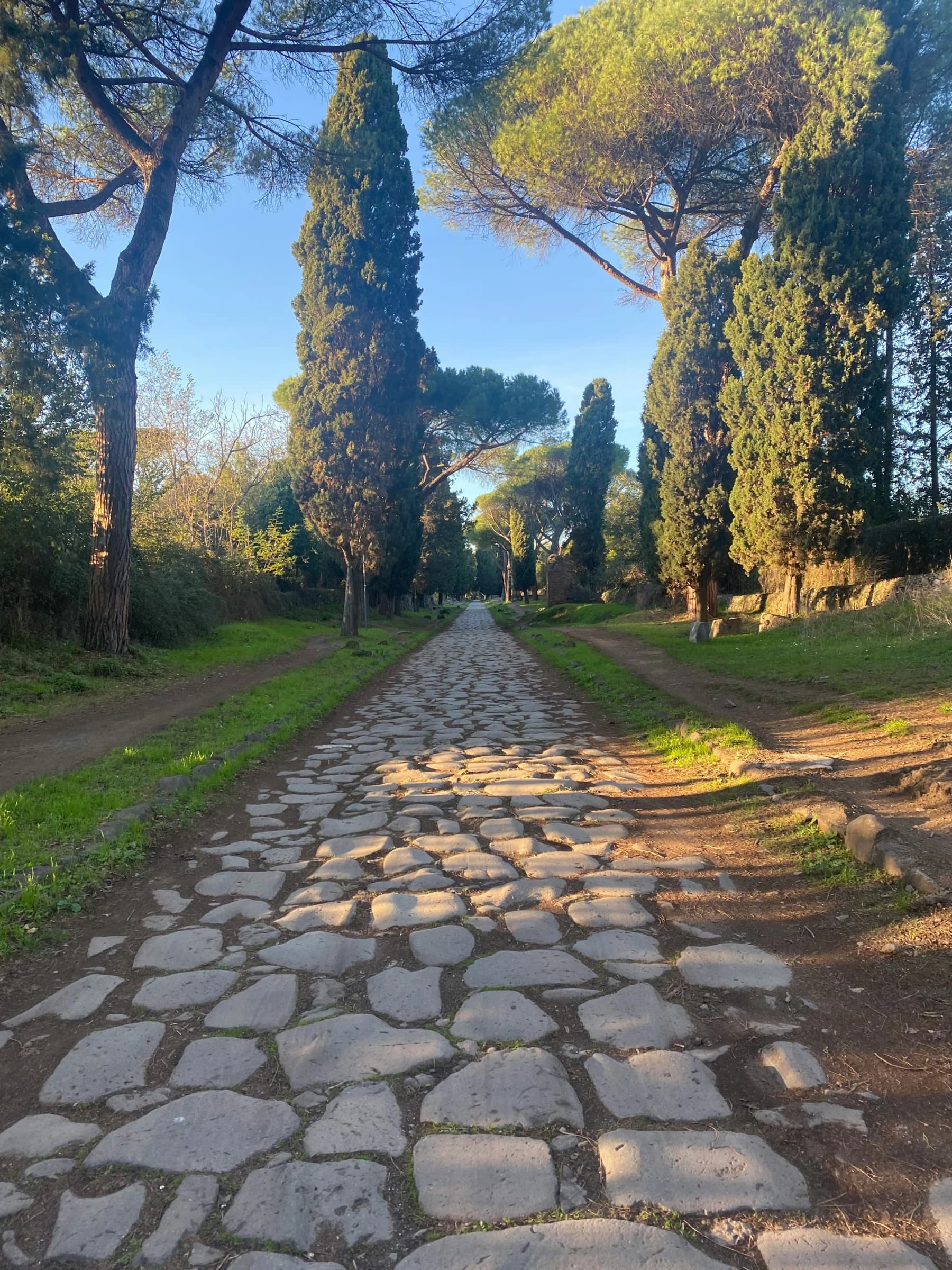
The leading theory traces the English verb roam back through Middle English romen to the Old French and Anglo-Norman word romier, meaning a pilgrim to Rome, literally "one who goes to Rome." During the Middle Ages, walking to Rome was one of Christian Europe's defining journeys. Pilgrims set out from as far as England and Scandinavia along routes like the Via Francigena, and the numbers surged during Jubilee years, starting with the first in 1300, when hundreds of thousands of people converged on the city at once.
Going to Rome was, for centuries, the archetypal long, open-ended journey: months on foot, an uncertain route, an outcome that mattered more than the schedule. Over generations, the word for that specific trip loosened into a word for that kind of trip in general, the way a proper noun slowly wears down into a common one. "Quixotic" started as a reference to a specific fictional knight before it became an adjective for anyone chasing an impractical ideal. "Roam" may have gone through something similar, starting as "doing what a Rome pilgrim does" and ending as "wandering, full stop."
It is fair to be honest about the uncertainty here. The Oxford English Dictionary lists the origin of roam as uncertain, and a rival theory connects it to an unrelated Old English root tied to rambling rather than to Rome directly. Etymologists have not settled the argument, and probably never will with full certainty this many centuries later. What is not in dispute is that the overlap between the two words has held in English for the better part of a thousand years, which is a long run for a coincidence, and more than enough to earn a place in a pun.
Why we named this Roam Rome
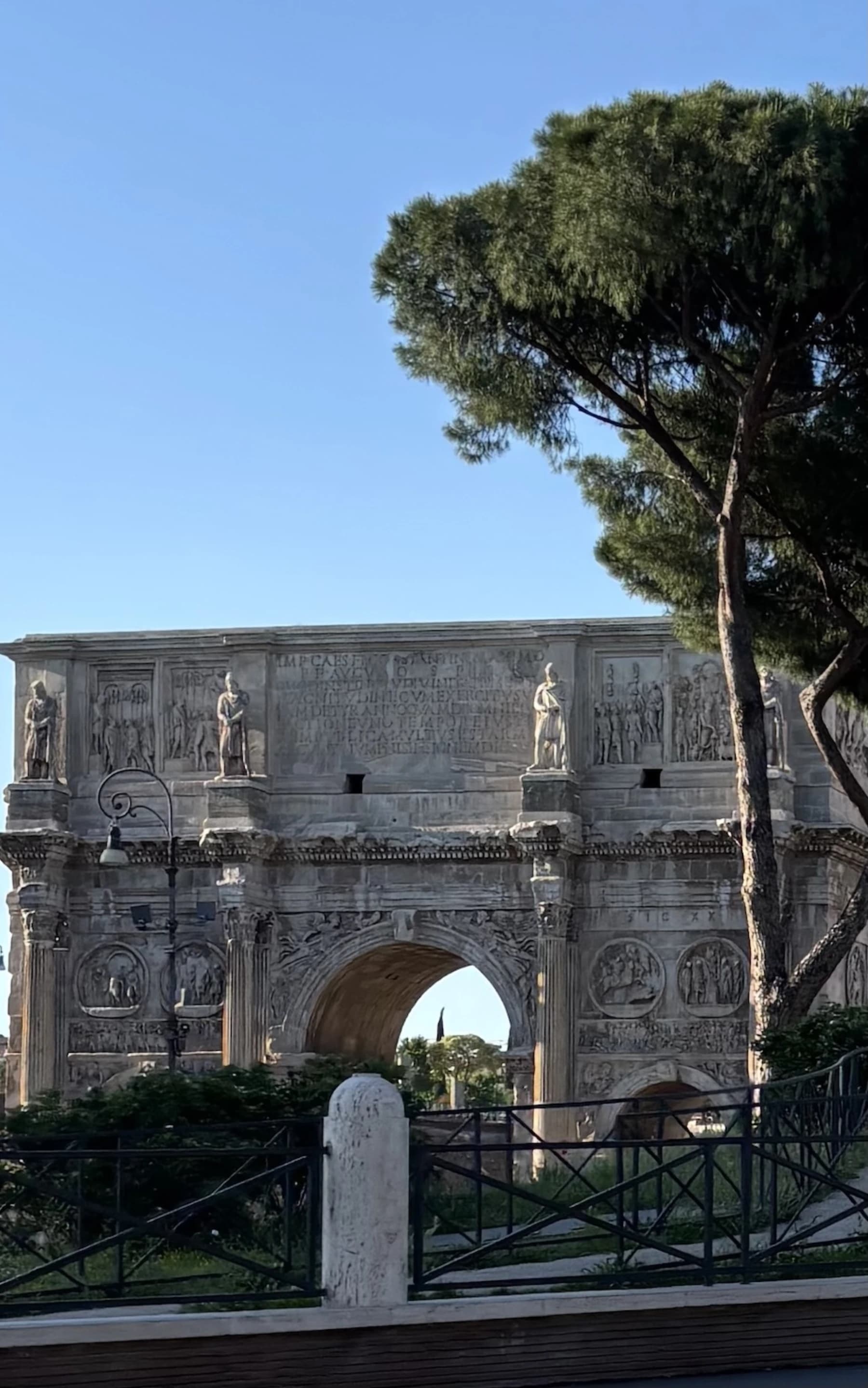
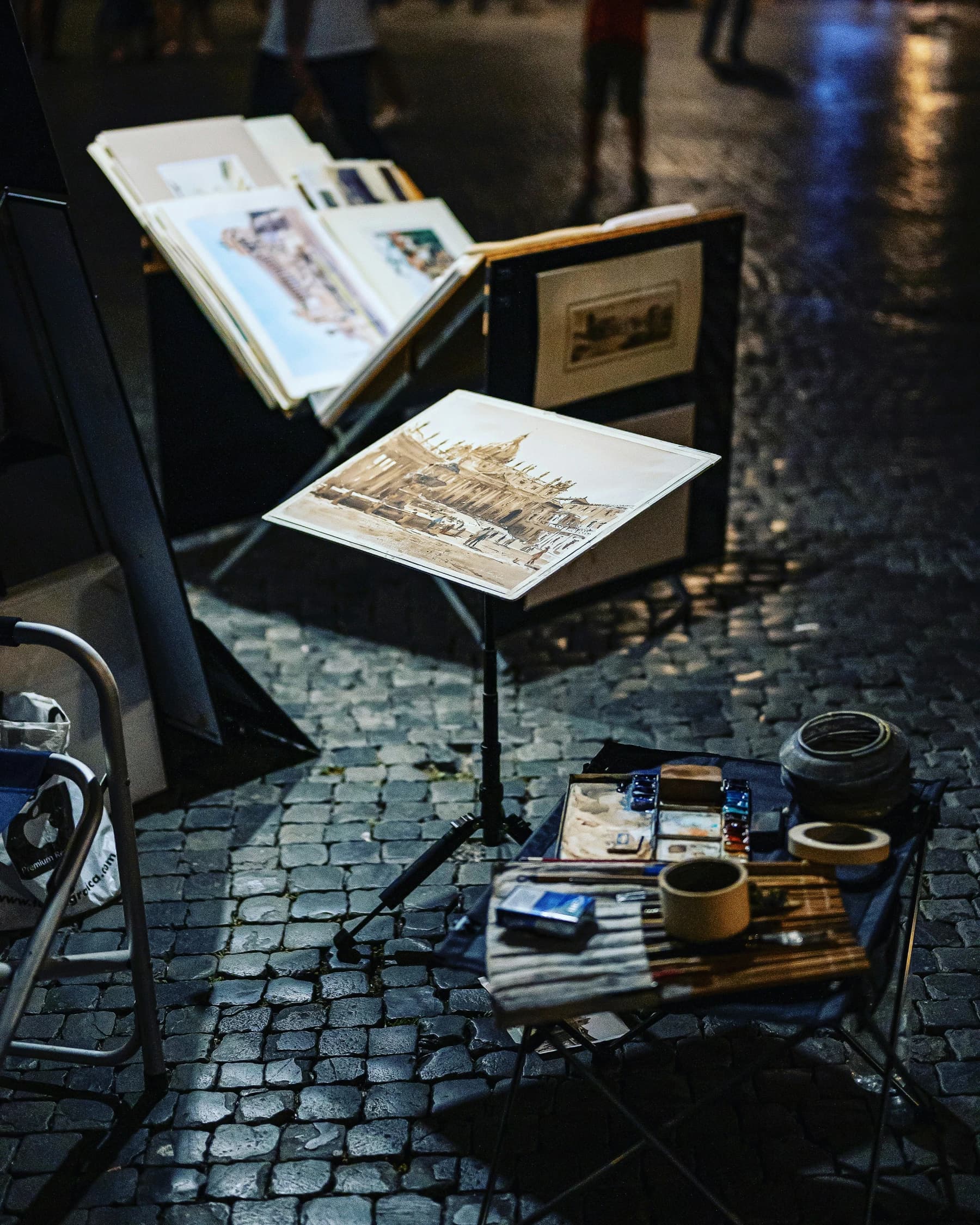
Visiting Rome well means holding two things at once that naturally pull in opposite directions. There is the fixed list: the Colosseum, the Vatican Museums, the Trevi Fountain, the Pantheon, sights with opening hours, ticket queues, and in several cases timed entry that has to be booked weeks in advance. And there is everything else: a market morning in Testaccio, getting pleasantly lost in the Monti backstreets, the aperitivo you did not plan to have because a table happened to be free. Most travelers remember the second kind of moment more vividly than the first, even though the first kind is what they spent months researching.
The two are not actually in competition. A loose plan for the fixed things is what buys you the freedom to roam the rest of the time. Show up to the Colosseum without a timed ticket and you spend your would-be wandering morning standing in a queue instead. Structure, used well, is not the opposite of spontaneity. It is what protects the time you have left for it.
Rome mode
Colosseum and Forum, Vatican Museums, Borghese Gallery, Trevi at sunrise. Book ahead, arrive on time, non-negotiable hours.
Roam mode
Testaccio mornings, Trastevere backstreets, aperitivo hour, a Sunday market. No ticket, no clock, no fixed target.
Best trips
Fixed things booked and boxed into a morning or evening, wide-open blocks left between them for wandering.
How to actually combine the two
None of this requires a complicated system. It requires deciding, before you arrive, which parts of the trip are fixed and which are not, and protecting both on purpose.
- Book timed entry in advance for the sights that require it: the Colosseum and Roman Forum, the Vatican Museums, the Borghese Gallery. These are the parts of the trip with no walk-up flexibility.
- Leave at least half a day per two-day stretch genuinely open, nothing booked, nothing scheduled, no destination in mind when you set out.
- Pick a neighborhood to roam in, not a sight to see. Testaccio, Trastevere, Monti, and the Jewish Quarter each reward an unplanned hour more than a checklist does.
- Treat at least one meal a day as roaming time. Do not pre-book every table. Leave lunch loose enough to follow your nose.
- Choose a base that rewards walking out the door with no plan. Some neighborhoods make that easy, others make it a project. See where to stay in Rome for the tradeoffs.
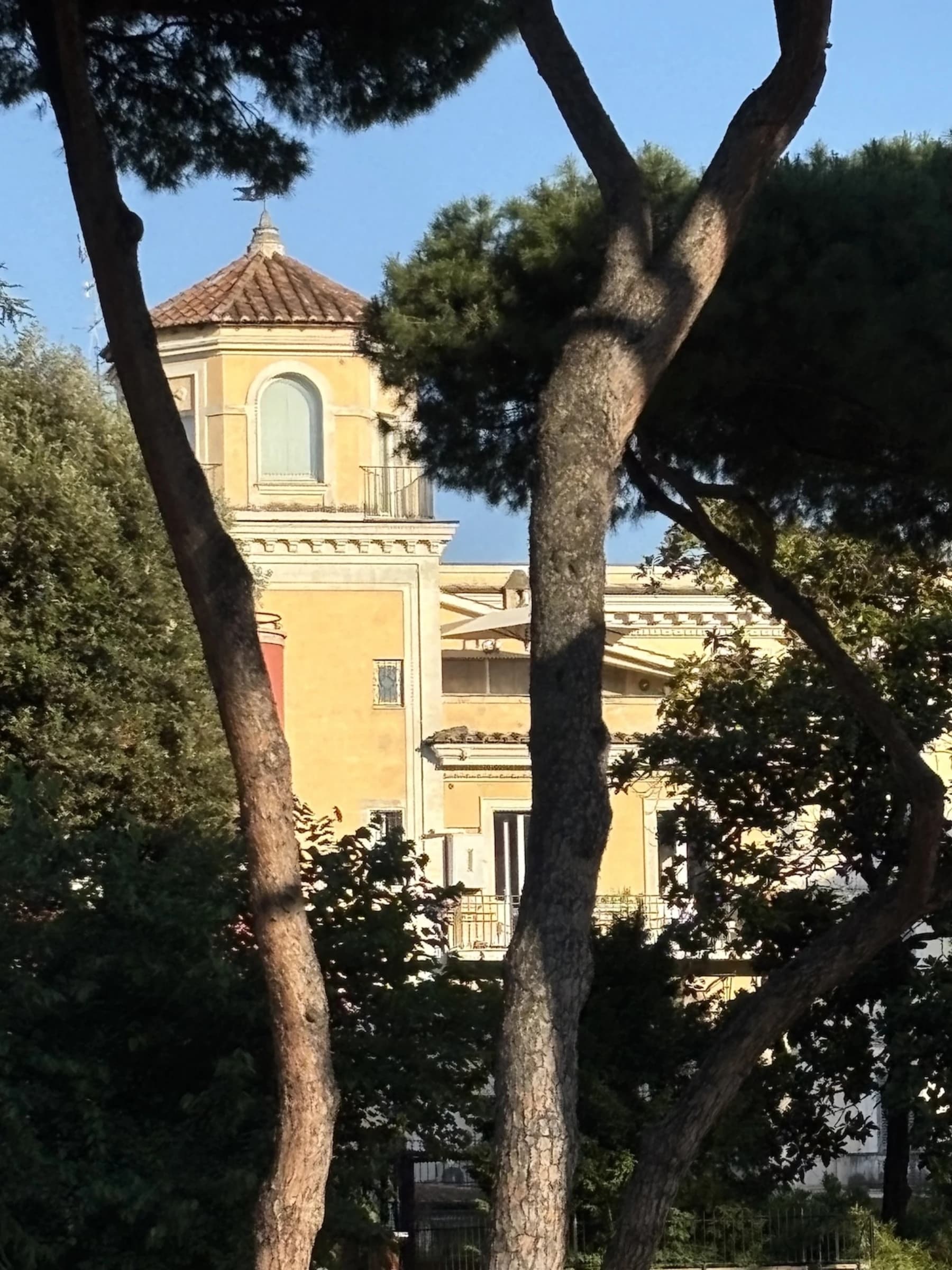
If you want somewhere specific to point the wandering, Rome's parks and gardens are some of the most reliable roaming ground in the city: nowhere to be, nothing to book, and no queue at the entrance.
The short version
Rome is the city. Roam is what you do in it once the fixed things are handled. Whether the two words are truly related or just a very old coincidence, the overlap points at something real about how this city rewards visitors: plan tightly for the handful of things that need it, then leave room to get pleasantly lost in everything else.
Plan the fixed things
Get the structure sorted, then go roam
A routed day plan handles the timed entries and walking order so the rest of your trip is actually free for wandering.
Frequently asked questions
Is it 'Rome' or 'roam'?
Both, depending on what you mean. Rome is the city, a proper noun from the Latin Roma. Roam is a verb meaning to wander without a fixed route. They are spelled differently and mean different things, but in almost every English accent they are pronounced identically.
Does the word 'roam' actually come from 'Rome'?
That is the leading theory, though etymologists do not all agree. Middle English romen is widely traced to the Old French romier, a word for a pilgrim to Rome. So many medieval travelers walked to Rome for the Jubilee years that the trip itself became linguistic shorthand for a long, open-ended journey, which eventually loosened into just wandering. The Oxford English Dictionary lists the origin as uncertain, and a rival theory ties it to an unrelated Old English root. Either way, the overlap has held in English for close to a thousand years.
Why is this site called Roam Rome?
Because visiting Rome well means doing two things that pull in opposite directions: seeing the fixed list of unmissable sights on a schedule, and wandering the rest of the city with no plan at all. Roam Rome is built around holding both at once, structure for the things that need it, room for the rest.
What's the best way to mix sightseeing and wandering in Rome?
Book timed entry for the handful of sights that require it, the Colosseum and Forum, the Vatican Museums, the Borghese Gallery, and treat those bookings as fixed anchors. Then leave real blocks of time, at least half a day per two-day stretch, with nothing booked at all. Pick a neighborhood rather than a sight to spend that time in.
Related reading
- How to Spend a Sunday in Rome
- Morning in Testaccio
- Parks and Gardens in Rome
- First Time in Rome: Complete Planning Guide
Related Services
Ways we can help with this trip
Personalized itineraries
Day-by-day Rome plans built around timing, geography, and the way you actually travel.
Explore itineraries→Experiences
Cooking classes, evenings, day trips, and concierge-style add-ons that fit around your trip.
See experiences→Airport transfer
Fixed-rate pickup from FCO or Ciampino with meet and greet inside arrivals.
Book airport transfer→Stay in Testaccio
A two-bedroom apartment in Testaccio for travelers who want a local base without losing city access.
View the Testaccio stay→