
Last updated May 2026 · 11 min read
Rome has two parallel food cities. One is designed for visitors who will never return: laminated menus near the Pantheon, tourist prix-fixe near the Vatican, pasta served in paper bowls outside the Colosseum. The other is what Romans actually eat: neighbourhood trattorias with handwritten menus, wine that costs four euros a glass, and kitchens that close when the food runs out. The difference between them is geography and knowing where to look.
At a Glance: Best Restaurants by Budget
| Restaurant | Budget | Neighbourhood | Best For |
|---|---|---|---|
| Supplì Roma | € | Centro / Trastevere | Street food, quick lunch |
| Pizzarium Bonci | € | Prati (Vatican) | Pizza al taglio |
| Mordi e Vai | € | Testaccio Market | Sandwiches, market lunch |
| Mercato Primi Piatti | € | Testaccio Market | Handmade pasta, lunch |
| Grottino a Testaccio | €€ | Testaccio | Roman pizza, locals only |
| Ai Cocci | €€ | Testaccio | Classic Roman trattoria |
| Da Enzo al 29 | €€ | Trastevere | Cacio e pepe, carbonara |
| Flavio al Velavevodetto | €€ | Testaccio | Roman classics, cacio e pepe |
| Blu Mare | €€€ | Prati | Seafood, special occasion |
| Masto | €€€ | Testaccio | Wine bar + kitchen |
| Casa Mora | €€€ | Testaccio | Roman & Campanian restaurant |
| Casa Manco | € | Testaccio Market | Pizza al taglio, market lunch |
| Armando al Pantheon | €€ | Centro Storico | Roman trattoria, near Pantheon |
| Da Giggetto | €€ | Jewish Quarter | Carciofi alla giudia, Jewish-Roman |
€ = under €20/person · €€ = €20–45/person · €€€ = €50+/person
How to Spot a Tourist Trap
Before the list: the five red flags that are reliable across every neighbourhood.
🚩 Menu with photographs
Real Roman kitchens don't photograph their dishes.
🚩 Host standing outside recruiting
Restaurants that need pavement salespeople don't have enough regulars.
🚩 Within 50 metres of a major landmark
Not absolute, but the Pantheon and Trevi perimeter are optimised for volume, not cooking.
🚩 Menu in six languages
One or two is normal in a central neighbourhood. Six means tourist-first kitchen.
A note on Google reviews: a well-documented scandal involving fake accounts inflating ratings or damaging competitors has made Google one of the least reliable sources for restaurant research in Rome. Romans use TripAdvisor instead, despite its own imperfections. The best source remains a local contact or your accommodation host.
Budget: Where to Eat Well for Under €20
Rome's street food and market-lunch circuit is genuinely excellent. These are not compromises — some of the best food in the city costs under ten euros.
Supplì Roma
€ · Street food · Centro Storico & Trastevere
The best suppli in the city centre. Fried rice balls with a molten mozzarella core and tomato ragu: eat them standing, directly from the paper, as hot as you can manage. Queues move fast. Multiple locations near Campo de' Fiori and in Trastevere. Budget €3–5 per piece.
Pizzarium Bonci
€ · Pizza al taglio · Prati (near Vatican)
Gabriele Bonci's pizza al taglio operation near the Vatican is probably the most technically serious pizza-by-the-slice in Rome. Sold by weight, eaten standing, with a rotation of toppings that changes daily. Via della Meloria 43. Expect a short queue at peak lunch; it moves. Budget €5–12 for a satisfying portion.
Casa Manco
€ · Pizza al taglio · Testaccio Market (Mon–Sat, 7am–3:30pm)
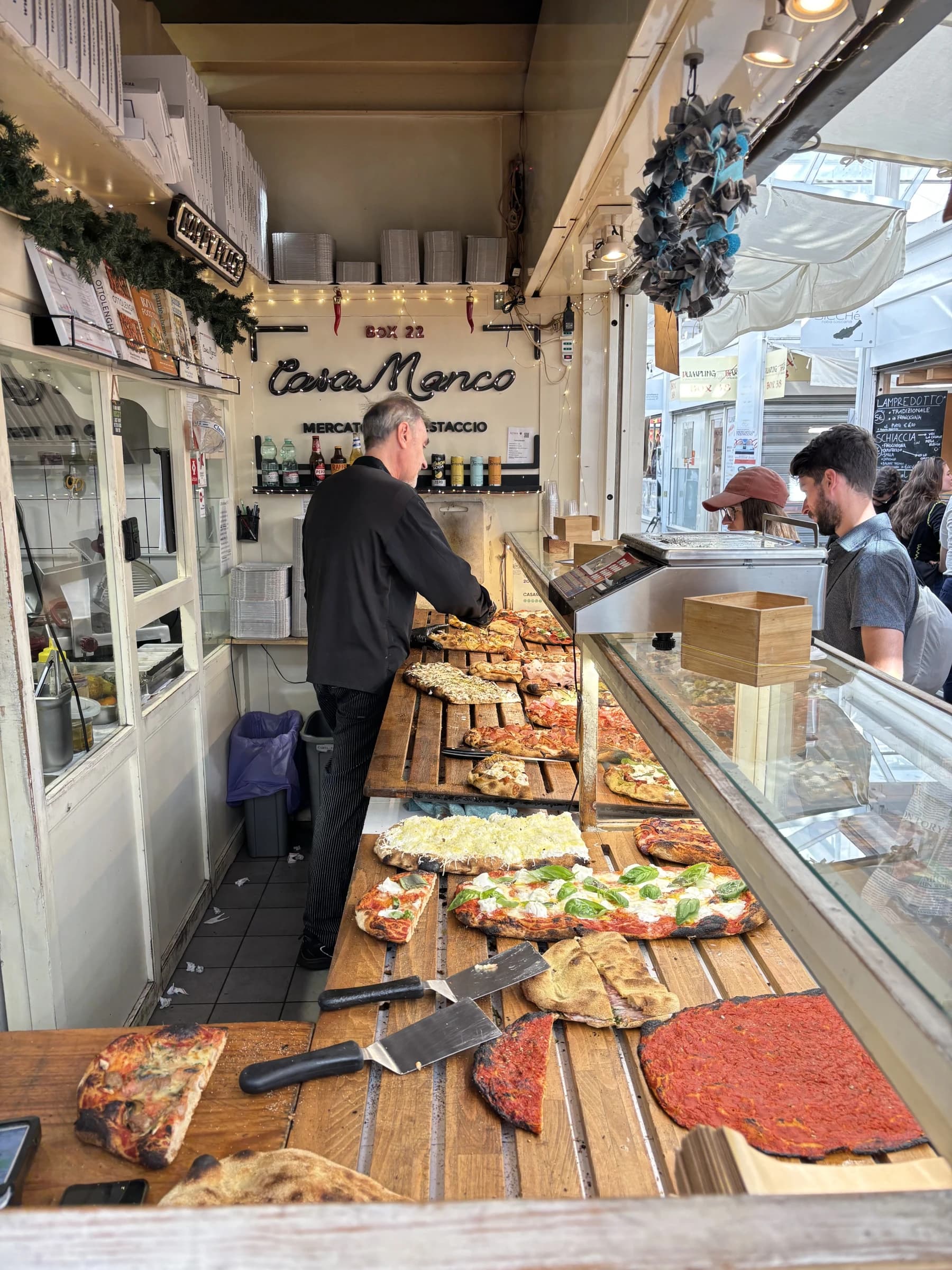
Box 15 inside the Testaccio Market. Better toppings and a more considered dough than most pizza al taglio in the city: slow- fermented, properly blistered, sold by weight. The toppings rotate, but the standards to order are mortadella e pistacchio, fiori di zucca, and potato with rosemary. A market lunch here costs under ten euros and outperforms most sit-down restaurants at twice the price.
Testaccio Market: Mordi e Vai & Primi Piatti
€ · Market food boxes · Testaccio (Mon–Sat, 7am–3:30pm)
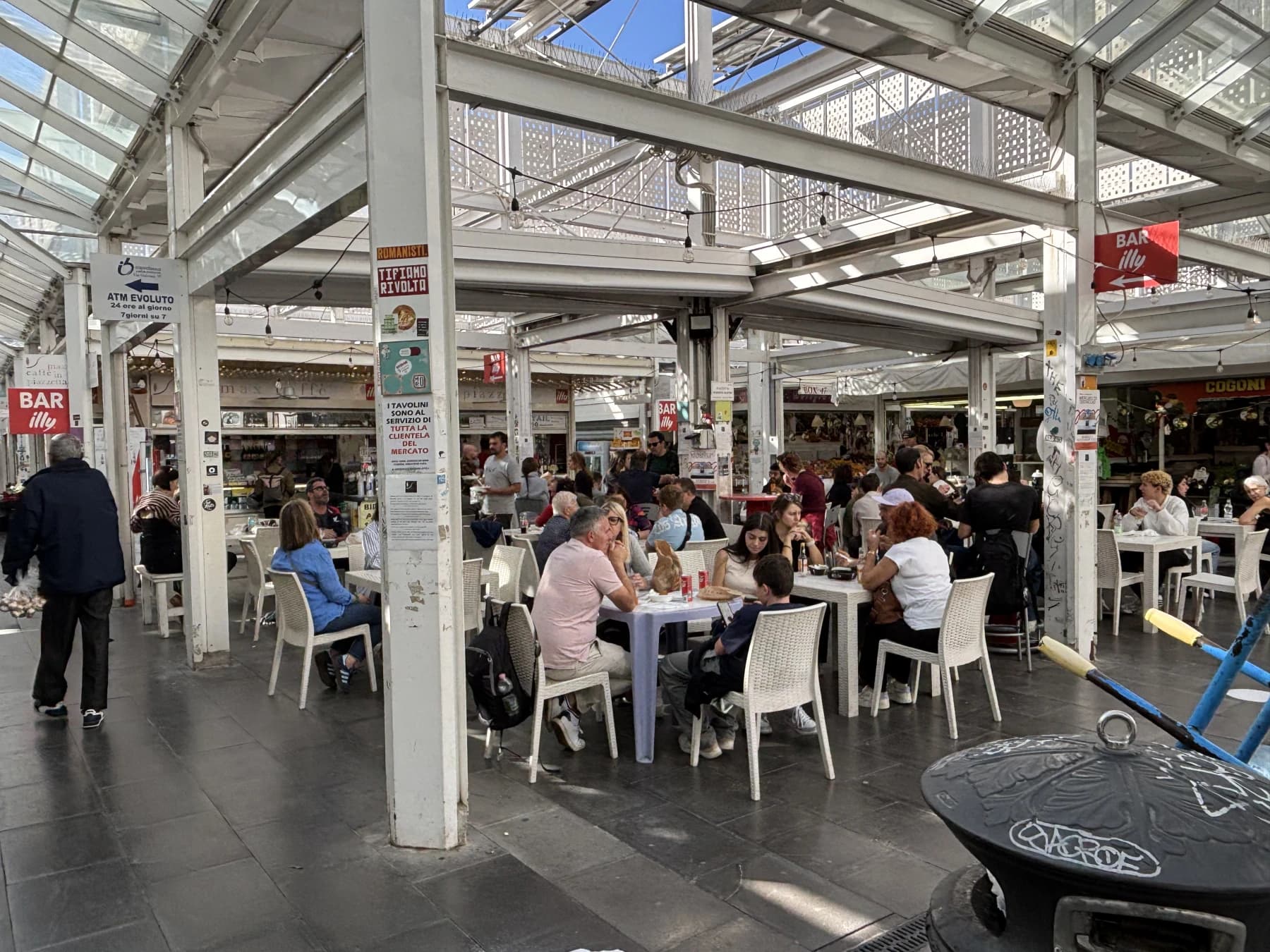
Two boxes inside the covered market that represent some of the best value food in Rome.
- Mordi e Vai — Sergio Esposito's sandwich stall. Braised offal, slow-cooked meat, and traditional Roman cuts served on bread. The vaccinara and trippa sandwiches are definitive.
- Mercato Primi Piatti — Handmade pasta cooked to order: cacio e pepe, carbonara, gnocchi agli scampi. Eat at a simple table inside the market. Around €9–12 for a full pasta dish. One of the least tourist-known meals in Rome.
Mid-Range: The Real Roman Trattorias (€20–45)
A proper Roman trattoria dinner — two courses, house wine, water, coperto — runs €25–40 per person at the places worth eating at. Book ahead for Friday and Saturday evenings anywhere on this list.
Flavio al Velavevodetto
€€ · Roman trattoria · Testaccio · Booking required
The most consistent cacio e pepe in the neighbourhood, made properly: no cream, no shortcuts. Built into the Monte dei Cocci — a hill of ancient Roman amphora shards used as landfill — which makes the setting as unusual as the kitchen is reliable. Order the cacio e pepe and the coda alla vaccinara.
Reserve a table →Ai Cocci
€€ · Traditional trattoria · Testaccio · Book for weekends
A traditional Roman trattoria in the proper sense. The menu covers the classics — carbonara, cacio e pepe, coda alla vaccinara, abbacchio — and the kitchen is not trying to update or reinterpret anything. That is exactly the point. Locals fill it on weekends.
Grottino a Testaccio
€€ · Roman pizza · Testaccio
Roman-style pizza: thin, properly charred, no frills. A neighbourhood place that serves the neighbourhood first, which means consistent product and fair prices. Nothing on the menu needs to justify the visit beyond the pizza itself.
Da Enzo al 29
€€ · Roman trattoria · Trastevere · Via dei Vascellari 29
One of the reliable options in Trastevere, away from the piazza tourist perimeter. Traditional Roman menu, good cacio e pepe, solid wine list at honest prices. No reservations are taken: arrive before 6:30pm and expect to queue, the room is small. Avoids the Trastevere trap precisely because it serves locals who live in the area, not visitors passing through.
Restaurant info →Armando al Pantheon
€€ · Roman trattoria · Centro Storico · Book weeks ahead
One of the very few non-tourist-trap trattorias in the centro storico. Family-run since 1961, a short walk from the Pantheon on Via della Colonnella. The menu follows Roman seasons closely: artichokes in spring, wild mushrooms in autumn, robust braised meats in winter. Reservations fill up weeks in advance: this is not a spontaneous dinner option. The fact that Romans still eat here regularly, within fifty metres of the Pantheon, tells you everything you need to know.
Reserve a table →Da Giggetto al Portico d'Ottavia
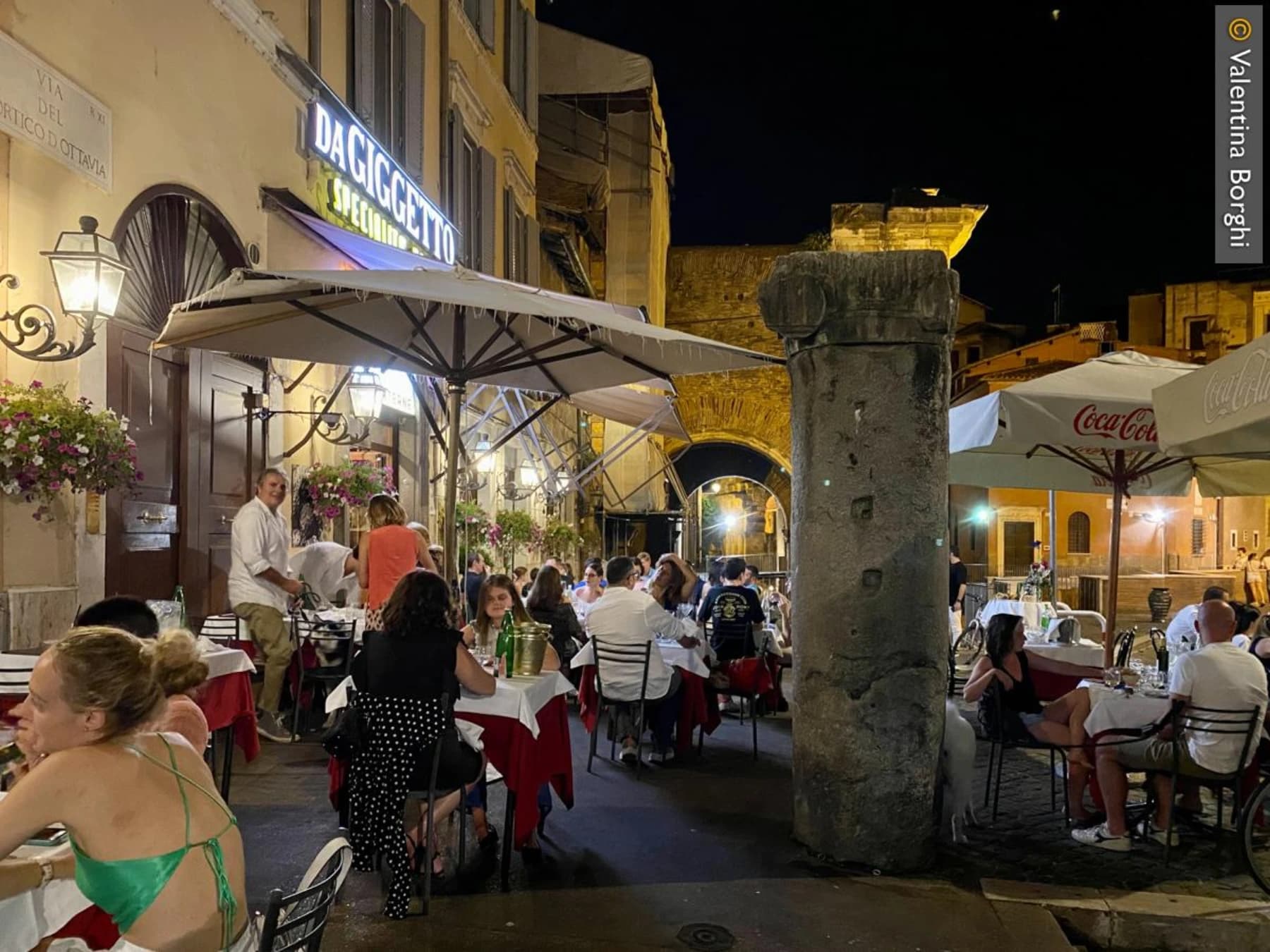
€€ · Jewish-Roman cuisine · Jewish Quarter · Via del Portico d'Ottavia 21
Sitting directly across from the ancient columns of the Portico d'Ottavia, this is the place most Romans point to for carciofi alla giudia done properly: the artichoke flattened and deep-fried until the outer leaves shatter like crisps while the heart stays tender. The kitchen also does filetti di baccalà (salt cod in batter) and the Roman pasta standards at a level that justifies the central location. Book ahead by phone: the terrace fills up quickly on warm evenings.
Restaurant info & reservations →Cook Roman pasta at the source
Small-group cooking classes in Rome: cacio e pepe, carbonara, handmade pasta, and the Roman dishes you just read about. Taught by someone who actually lives here.
View Cooking Classes →Splurge: Worth the Full Evening (€50+)
Spending more in Rome does not automatically mean better food. It means a longer evening with better wine, attentive service, and a kitchen with more scope. These are for when the meal is the event.
Blu Mare
€€€ · Seafood · Prati
Prati sits close enough to the coast that the fish arrives fresh and the kitchen knows what to do with it. Seafood in a room that feels like a real restaurant rather than a tourist convenience stop. The service is attentive and the wine list has thought behind it. Not listed on the usual booking platforms: reserve by phone or through the restaurant's own site.
Restaurant info →Masto
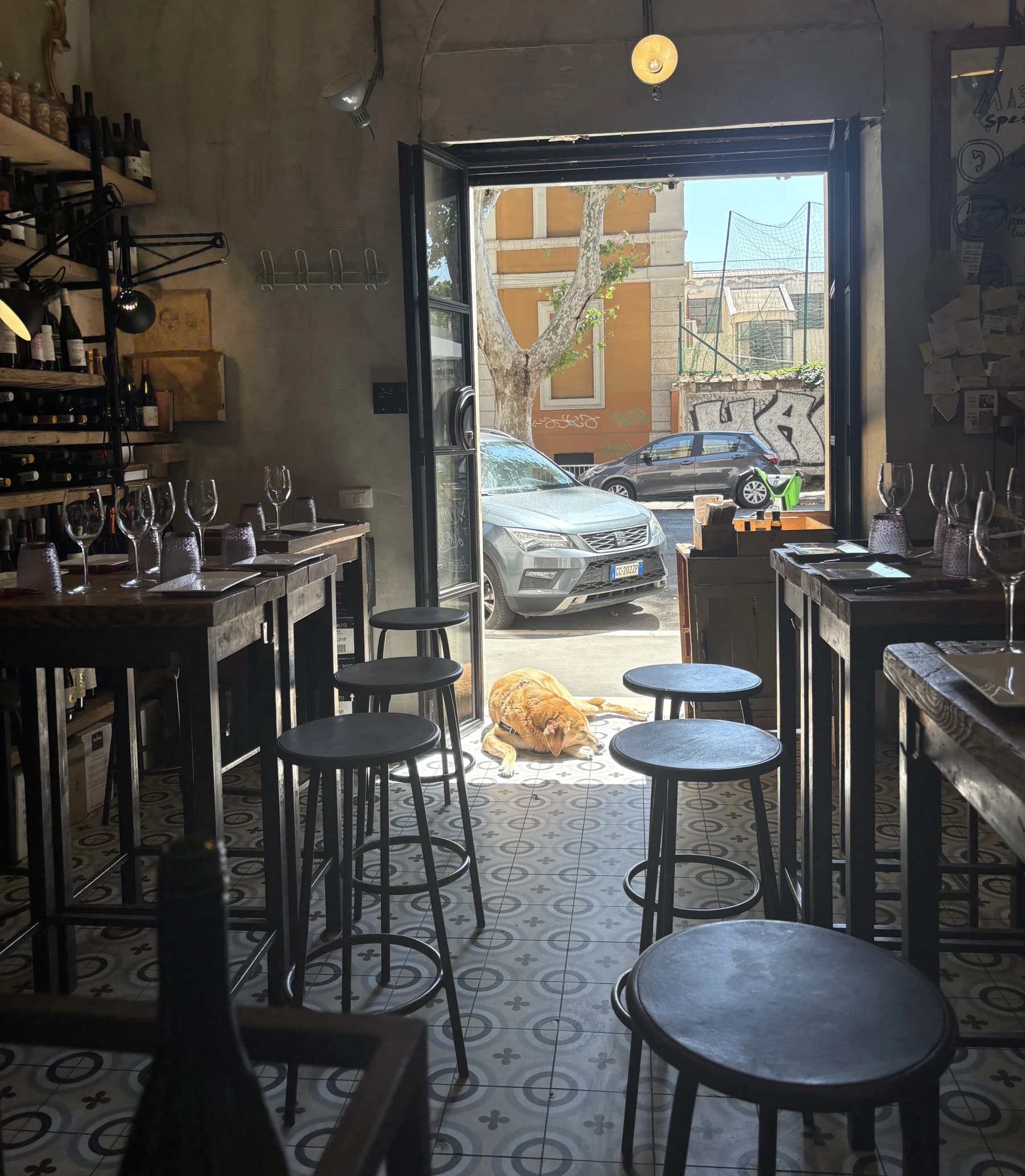
€€€ · Wine bar + kitchen · Testaccio
More wine bar than restaurant, though the kitchen produces food worth eating. Good bottles, knowledgeable service, an unhurried room. Best approached as a destination for a long evening rather than a quick dinner — the kind of place where you arrive for a glass and leave two hours later having eaten well without quite planning to.
Casa Mora
€€€ · Roman & Campanian restaurant · Testaccio · Book ahead
A full restaurant in the heart of Testaccio, not just a wine stop: a real menu drawing on both Roman and Campanian traditions, the family roots showing in the cooking, alongside a carefully curated list of natural wines. The producers are chosen for shared values on sustainability and terroir. One of the more considered kitchens in the neighbourhood, worth anchoring a full dinner around.
Best Restaurants by Neighbourhood
If you know which area you'll be in, use this as a quick reference. All places listed are described in full above.
Testaccio
- Mordi e Vai / Casa Manco € · market lunch, pizza al taglio
- Flavio al Velavevodetto / Ai Cocci €€ · classic Roman trattoria
- Casa Mora €€€ · full dinner, Roman & Campanian
- Masto €€€ · wine bar evenings
Trastevere
- Da Enzo al 29 €€ · Via dei Vascellari, no reservations
Prati (near Vatican)
- Pizzarium Bonci € · pizza al taglio by weight
- Blu Mare €€€ · seafood, special occasion
Centro Storico
- Supplì Roma € · street food near Campo de' Fiori
- Armando al Pantheon €€ · book weeks ahead
What to Order in Rome
Roman cuisine is specific. The classics exist in a clear hierarchy of quality and are worth understanding before you order.
The Four Pasta Dishes
Cacio e pepe, carbonara, amatriciana, gricia. These four dishes, made well, represent Roman cooking at its peak. Carbonara without cream. Amatriciana with guanciale not pancetta. Cacio e pepe made to order, not reheated. When you find a kitchen that makes all four correctly, return.
Suppli
Fried rice balls with a molten mozzarella center and tomato sauce. Rome's best street food alongside pizza al taglio. Eat them standing, hot, from a proper rosticceria.
Artichokes (seasonal)
Carciofi alla giudia (deep fried, Jewish quarter tradition) or carciofi alla romana (braised with mint and garlic). Only good when artichokes are in season: late winter through spring. The best versions are found in the Jewish Quarter, where the tradition originates.
Gelato
One rule: if it's piled high in fluorescent mounds, it has been inflated with air and artificial colour. Real gelato sits flat in metal containers with lids. Less visually dramatic, significantly better.
- Gelateria Brivido (Testaccio) — The neighbourhood reference. Small, unpretentious, made daily. The pistachio and the fior di latte are the ones to order.
- Gelateria dei Gracchi (Prati, Via dei Gracchi 272) — The most useful gelateria if you are near the Vatican. Consistently good across flavours, never a tourist-trap operation despite the location.
- Fatamorgana (multiple locations, including Monti) — Known for unusual natural-flavour combinations: basil and walnut, ricotta and fig, lavender. Not the right choice if you want the Roman classics, but worth knowing it exists.
Timing
Lunch runs from 12:30 to 3pm. Many of the best trattorias do their serious cooking at lunch: a proper two-course meal with wine costs less than a tourist dinner at a bad restaurant. Some kitchens close entirely in the evening or serve a reduced menu.
Dinner before 8pm means eating alone. Romans eat at 8:30 to 9pm. Arriving at 7:30 is possible and sometimes strategic for getting a table without a reservation, but the atmosphere won't be there yet.
Book reservations for Friday and Saturday evenings at any restaurant worth eating at. A week ahead is reasonable for most places. Walking in on a Saturday night without a booking at a popular trattoria means either waiting or compromising.
Coffee
Espresso is drunk standing at the bar, quickly. Sitting costs significantly more. Cappuccino is a morning drink — ordering one after noon won't cause offense but will be noted. After a meal: espresso. Rome's espresso is typically darker and more bitter than northern Italian or specialty coffee styles; if you want lighter, look for bars specifying single-origin roasters, particularly in Monti and Prati.
Aperitivo in Rome
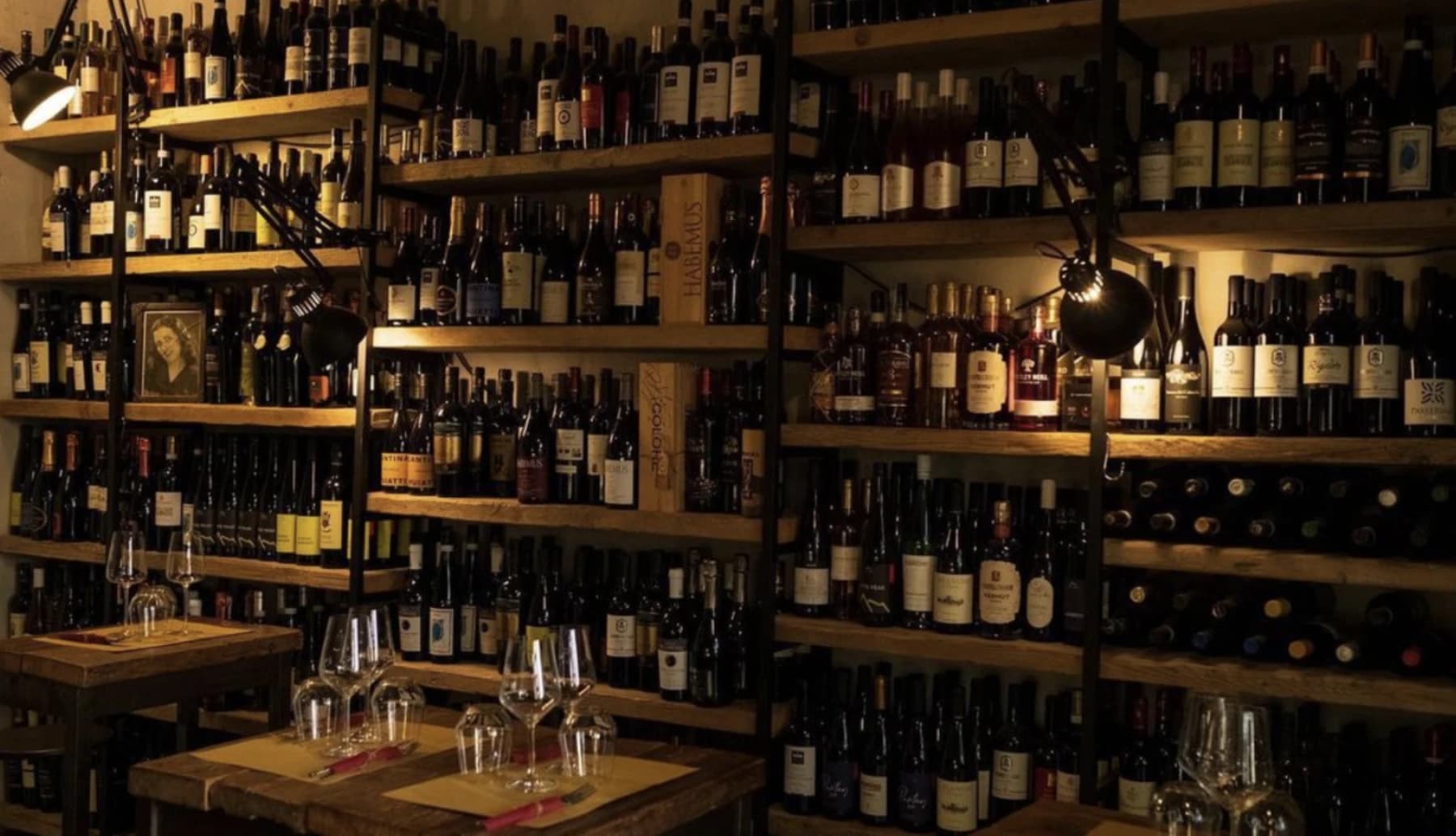
Rome's aperitivo is not the Spritz-and-buffet culture you find in Milan. It is quieter and more wine-focused: a glass of something at the bar between 6:30 and 9pm, with bar snacks or a small plate. The ritual is about decompressing at the end of the day, not filling up before dinner.
Masto in Testaccio is a good aperitivo destination: a natural wine list, knowledgeable service, no pressure to move on. The enoteca culture in Monti, where Ai Tre Scalini on Via dei Serpenti is the most reliable, is worth knowing if you're staying in that area. Ordering a Negroni or a glass of Lazio white (Bellone, Greco di Velletri) is more Roman than the Aperol Spritz options that will be offered first.
Questions About Eating in Rome
What are the best cheap restaurants in Rome?
Supplì Roma (rice balls, €3–5 each), Pizzarium Bonci near the Vatican (pizza al taglio by weight, €5–12), and the food boxes inside the Testaccio Market — Mordi e Vai for offal sandwiches and Mercato Primi Piatti for handmade pasta at around €10.
What is the most famous dish in Rome?
Cacio e pepe: pasta with pecorino romano cheese and black pepper. Simple ingredients, technically demanding, and almost impossible to find made correctly outside of Rome.
Where should I eat in Trastevere?
Avoid the main piazzas and Viale di Trastevere. The side streets hold the genuine places. Da Enzo al 29 on Via dei Vascellari is a reliable mid-range trattoria that serves the neighbourhood, though it takes no reservations, so arrive before 6:30pm and expect to queue.
Do Romans eat late?
Yes. Dinner starts at 8:30 to 9pm. Arriving before 8pm means the kitchen is warming up and the room is empty. The atmosphere, and often the food, improves as the evening progresses.
Is it rude to ask for the bill in Rome?
No, but the bill won't come until you ask for it. Catch the server's eye and say “il conto, per favore.”
Should I tip in Rome?
Tipping is not mandatory in Italy. A small amount (rounding up, or €2 to €5 for a dinner for two) is appreciated but never expected. Service charge (coperto) is already included in most bills as a cover charge.
What is coperto?
A cover charge, typically €1 to €3 per person, included on most restaurant bills in Rome. It covers bread, water service, and the right to sit at the table. It is normal and not negotiable.
Related reading
- Morning in Testaccio: Rome's Best Local Market
- Rome's Jewish Quarter
- First Time in Rome
- Where to Stay in Rome for First-Time Visitors
Related Services
Ways we can help with this trip
Personalized itineraries
Day-by-day Rome plans built around timing, geography, and the way you actually travel.
Explore itineraries →Experiences
Bookable Rome services (transfers, restaurant reservations, planning calls, car with driver) plus curated evenings, cooking classes, and day trips.
See experiences →Airport transfer
Fixed-rate pickup from FCO or Ciampino with meet and greet inside arrivals.
Book airport transfer →Stay in Testaccio
A two-bedroom apartment in Testaccio for travelers who want a local base without losing city access.
View the Testaccio stay →