
Last updated May 2026 · 11 min read
Three days in Rome is enough — genuinely enough — for a first visit, provided the structure is right. You can see the Vatican, stand in the Colosseum, walk the Roman Forum, eat cacio e pepe somewhere that means it, and still have an evening left for Trastevere. What three days cannot do is cover everything, move slowly, or survive bad sequencing.
The most common mistake is treating Rome like a checklist: Vatican one morning, Colosseum the next afternoon, Trevi Fountain somewhere in between. On a map this looks manageable. On foot, in summer, after a €22 plate of reheated pasta near the Borghese, it produces the exhausted, vaguely cheated feeling that follows short Roman trips home.
The fix is geography. Group sites by neighborhood, not by fame. Each of the three days below covers a different part of the city — no unnecessary crossings, no wasted transitions. That's how three days in Rome feels like more than it is.
Is 3 Days in Rome Enough?
Yes, with two conditions. First: you need to pre-book Vatican and Colosseum tickets before anything else. Both sell out weeks in advance during peak season, and showing up without them on a three-day trip is a serious problem — two to three hours queuing for either is half a morning gone. Second: you need to resist adding. Every "while we're nearby" decision on a short trip costs more time than it gives.
Three days structured around geography gives you: the Vatican complex properly (not rushed), the ancient sites without the midday heat, and enough of the historic center to feel like you've been there rather than just photographed it. That's the right frame for a first visit.
Day 1: Vatican + Prati
Start at the Vatican Museums no later than 8:00am with pre-booked timed entry. The Sistine Chapel is reachable within 30–40 minutes of entry if you know the route (turn left after the Gallery of Maps). By midmorning, move through to St. Peter's Basilica — free entry, no ticket required — and climb the dome if your legs allow it. The views are worth the 551 steps.
By 1:00pm you'll be hungry and on the right side of the river. Walk north into Prati rather than eating near St. Peter's Square — the restaurants around the piazza are almost universally tourist-priced and mediocre. Prati is quiet, residential, and good: there are proper trattorie on Via Cola di Rienzo that serve Romans at reasonable prices.
After lunch: Castel Sant'Angelo. It takes about 90 minutes to move through properly and the rooftop view of the Tiber and dome of St. Peter's is one of the better moments Rome gives you without much effort. In the late afternoon, cross the Tiber via Ponte Sant'Angelo and walk into the centro storico for aperitivo. You've earned it.
Vatican Museums skip-the-line entry
PartnerTimed entry — essential for Day 1. Sistine Chapel and Raphael Rooms included.
From €35
Day 2: Ancient Rome + Testaccio
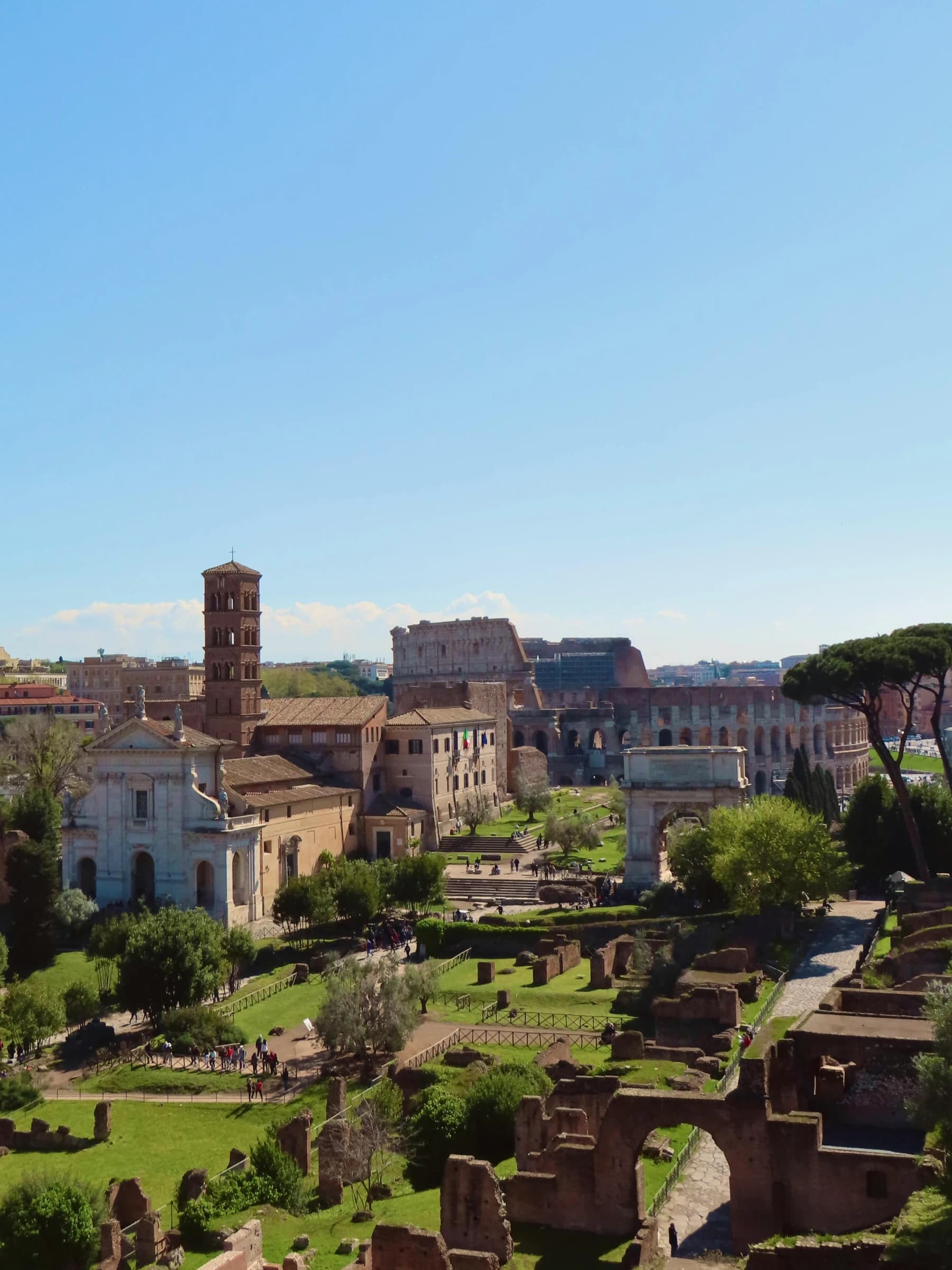
Day 2 is the most demanding physically and the most rewarding historically. Start at the Colosseum at opening — 9:00am with pre-booked tickets that include the Roman Forum and Palatine Hill. Spend an hour in the Colosseum, then cross into the Forum. The Forum rewards time: give it 90 minutes to walk the Via Sacra properly, read what you're looking at, and climb the Capitoline Hill at the far end.
By early afternoon, walk south through Aventino or take a 10-minute bus ride into Testaccio. If you time it right, the Mercato Testaccio is still winding down — it closes around 2:00pm and is worth seeing even in its last hour. Have lunch here: the market has some of the most honest food in Rome at prices that haven't adjusted for tourism yet.
Testaccio in the afternoon is Rome at its most local. The neighborhood is where I grew up. It's not scenic in the postcard sense — no famous ruins, no tourist shops — but it moves at a Roman pace. Eat something from the market, sit with a coffee, and let the day decompress. Dinner here in the evening at one of the proper trattorie on Via Giovanni Branca or Via Galvani.
Colosseum with Roman Forum and Palatine Hill
PartnerTimed entry — sells out weeks ahead in peak season. Book alongside Vatican tickets.
From €20
Day 3: Centro Storico + Trastevere
Day 3 covers the historic center — the part of Rome that looks like the postcards — and finishes across the river in Trastevere. Start at the Pantheon when it opens at 9:00am (timed entry required, book online a few days ahead at around €5). It is smaller than you expect and more impressive than photographs suggest. Go before the crowds arrive.
From the Pantheon, walk northwest to Piazza Navona — a 10-minute walk through quiet streets that Rome gives you for free. The piazza itself is best in the morning before the caricature artists and tourist restaurants fully activate. Have a coffee at one of the bars on the square, stand in the middle, and look at the Fountain of the Four Rivers properly.
Walk south to Campo de' Fiori for mid-morning — the market runs until around 1:30pm and sells produce, flowers, and spices. It has a different character to Testaccio: louder, more mixed, more touristy at the edges, but still a real market at its center. Lunch in the nearby streets — Via dei Baullari and Via del Pellegrino have small restaurants that serve Romans who work in the area.
Afternoon: Trastevere. Cross the Tiber at Ponte Sisto and walk into the neighborhood. In the afternoon it is quieter than its reputation suggests — the chaos arrives after 9:00pm. Spend the late afternoon wandering without agenda: the streets around Piazza di Santa Maria in Trastevere are genuinely beautiful and require nothing of you. Dinner in Trastevere to close the trip — book a table if you're going on a weekend.
What to Book in Advance
Two bookings are non-negotiable for a three-day visit:
- Vatican Museums: book as soon as your travel dates are confirmed. Entry slots, particularly early morning, sell out weeks ahead in spring and summer. An 8:00am or 8:30am slot gives you the Sistine Chapel with a fraction of the crowd.
- Colosseum: book alongside Vatican tickets. The combined ticket includes the Roman Forum and Palatine Hill, which is how you should visit them — in sequence, not as separate visits. Without a pre-booked slot, queues at the Colosseum regularly exceed 90 minutes in high season.
- Pantheon: timed entry at around €5, available online. Less critical to book weeks ahead but worth doing a few days before to guarantee your preferred time.
Want your three days planned properly?
Our PDF itineraries are geographically sequenced — the day order matches where you're staying, not just what's famous.
See the itineraries →Practical Notes
Transport: Rome is best navigated on foot and by bus. The metro has only two main lines and they miss most of what you want to see. Trams and buses cover the gaps well once you understand the main corridors. Taxis are metered and legitimate (avoid anyone who approaches you at the airport or station offering fixed prices).
Pacing: build a mid-afternoon break into Days 1 and 2 especially. The Vatican and the ancient sites are cognitively and physically demanding. Forty-five minutes back at your accommodation between 2:00pm and 4:00pm, particularly in summer, keeps you functional for the evening in a way that pushing through does not.
Shoes:cobblestones throughout. Not "slightly uneven" — properly irregular stone surfaces that will destroy thin-soled shoes and your feet with them. Comfortable walking shoes are the most important thing you pack for a Roman trip.
Restaurants:the 200 metres immediately surrounding any major tourist site — Colosseum, Vatican, Trevi Fountain — are almost uniformly poor quality at elevated prices. Walk two streets in any direction and the quality improves dramatically at the same price. In Prati: Via Cola di Rienzo and the streets north of Castel Sant'Angelo. Near the Forum: Via Capo d'Africa and the Celio neighbourhood. In the historic center: anything south of Campo de' Fiori.
Where to stay:for three days using this structure, Testaccio and the historic center (around Campo de' Fiori or Trastevere) are the best bases. They put you within walking distance of Days 2 and 3 without requiring transport back across the city each evening. Prati is convenient for Day 1 only.
For timed-entry strategy beyond Vatican and Colosseum, see the Rome Reservations Guide.
This article contains affiliate links. If you book tickets through these links, we may earn a small commission at no extra cost to you. We only link to providers we'd recommend regardless.
Frequently Asked Questions
Is 3 days enough to see Rome?
Yes — three days is genuinely enough for a first visit if the structure is right. You can cover the Vatican, the ancient sites, and the historic center without feeling like you sprinted through everything. Three days lets you pace each site properly, eat well, and still walk a neighborhood at night. It is not enough to go slowly, cover secondary sites like Borghese Gallery, or take day trips, but for the core of Rome it works well.
What is the best order to visit Rome's main sites in 3 days?
Group sites by geography rather than importance. Day 1: Vatican and Prati (north of the river, right bank). Day 2: Colosseum, Roman Forum, Palatine Hill, and Testaccio (south of center, left bank). Day 3: Pantheon, Piazza Navona, Campo de' Fiori, and Trastevere (center and left bank). This avoids crossing the city unnecessarily and keeps each day coherent on foot.
Do I need to book tickets in advance for 3 days in Rome?
Vatican Museums and Colosseum tickets are mandatory to book in advance — both regularly sell out weeks ahead during spring, summer, and early autumn. Book them before anything else, ideally at the same time you book your hotel. Pantheon entry is timed but generally available closer to your visit. Everything else in the historic center is free and walk-in.
What neighborhood should I stay in for a 3-day trip?
Testaccio, Trastevere, or the historic center are all strong choices. Testaccio puts you close to the ancient sites and the market, with excellent and honest restaurants. Trastevere is atmospheric in the evenings. The historic center gives you central access. Read the Where to Stay in Rome guide for a fuller comparison.
How much walking does a 3-day Rome itinerary involve?
Expect 8–12 kilometres per day on cobblestones and uneven Roman paving. Day 2 (Colosseum and Forum) is the most physically demanding — the Palatine Hill adds significant elevation. Build in a mid-afternoon break each day, particularly in summer. Comfortable walking shoes matter more than anything else you pack.
Related reading
- Is 2 Days in Rome Enough?
- 1 Week in Rome: Day-by-Day Itinerary
- Best Time to Visit the Vatican
- Where to Stay in Rome for First-Time Visitors
- Morning in Testaccio
- Getting from Rome Airport to the City
Related Services
Ways we can help with this trip
Personalized itineraries
Day-by-day Rome plans built around timing, geography, and the way you actually travel.
Explore itineraries→Experiences
Cooking classes, evenings, day trips, and concierge-style add-ons that fit around your trip.
See experiences→Airport transfer
Fixed-rate pickup from FCO or Ciampino with meet and greet inside arrivals.
Book airport transfer→Stay in Testaccio
A two-bedroom apartment in Testaccio for travelers who want a local base without losing city access.
View the Testaccio stay→