
Last updated Feb 2026 · 9 min read
The Vatican Museums are among the most visited sites in the world — and among the most mismanaged by visitors who arrive without a plan. The difference between a meaningful morning and an exhausting three-hour queue comes down almost entirely to timing and ticket strategy.
The short answer: arrive at 8:00–8:30am, on a Tuesday, Wednesday, or Thursday, outside of July and August, with tickets booked at least two weeks in advance. Everything below explains why — and what to do if your trip doesn't allow for ideal conditions.
Best default slot
8:00am or 8:30am, Tuesday to Thursday, with tickets booked well ahead.
Best fallback slot
5:30pm when offered. It often feels much lighter than midday and is one of the smartest late-booking choices.
Worst timing
Saturday, free-entry Sunday, Holy Week, and the 11:00am to 2:00pm crush in peak season.
Best Days and Hours to Visit
Weekdays are significantly calmer than weekends. Saturday is the single busiest day of the week — avoid it if you have any flexibility. Sunday is closed except for the last Sunday of each month, when entry is free, which makes it extraordinarily crowded.
Common planning mistake
The last Sunday of every month, Vatican Museums entry is free. This sounds like an opportunity. It is the opposite: the Museums become some of the most crowded they will be all year. Queues regularly exceed two hours and the Sistine Chapel feels overwhelming. If your trip falls on the last Sunday of a month, treat that day as a Vatican-free day and visit anything else.
Wednesday mornings are consistently the quietest weekday slot. The Pope's weekly general audience takes place in St. Peter's Square at 9:00am, which redirects thousands of visitors away from the Museums and toward the square. The effect is measurable: Wednesday mornings inside the Museums can feel noticeably calmer than an equivalent Tuesday or Thursday. If your schedule allows a Wednesday visit, the 8:00am or 9:00am slot on that day is the best single combination on the calendar.
Within the day, the first entry slot (8:00am) is the most controlled. Crowds build steadily from 9:30am onward and peak between 11am and 2pm. If you're visiting in peak season and can't get an 8am slot, late afternoon (3:30–4:00pm for a museum that closes at 6pm) is the second-best window — tour groups have largely cleared out and the light through the Gallery of Maps is exceptional.
Best months: November through February (excluding Christmas week and New Year). March, October, and early April are also good.
Avoid: Holy Week (the week before Easter), the last Sunday of each month, and all of July and August if crowds are a concern.
| Season | Crowds | Best slot strategy | Pricing reality |
|---|---|---|---|
| Jan to Feb | Lowest overall | Early morning still wins, late afternoon also works | Easiest time to find base-price inventory |
| Mar to Jun | High | First slot only if possible | Official tickets sell out faster, guided inventory rises |
| Jul to Aug | Very high | 8:00am or 5:30pm, avoid midday entirely | Highest premium pressure on reseller slots |
| Sep to Oct | High | Early weekday mornings remain best | Popular shoulder season, book early |
| Nov to early Dec | Moderate to low | More flexibility across the day | Better chance of official inventory without markup |
Where to Buy Vatican Tickets
Book directly through the Vatican's official site or through a reputable third-party provider. The official site gives you the most flexibility on entry times but sells out weeks in advance during peak season. Third-party providers sometimes have availability when the official site doesn't, and often include a guide which can meaningfully improve the experience inside the Sistine Chapel and Raphael Rooms.
Skip-the-line tickets are not optional during peak months — they're essential. The standby queue without pre-booked tickets regularly runs one to three hours in summer, and the line moves unpredictably. That's time that costs you elsewhere in your itinerary.
If you cannot get the first morning slot, do not automatically settle for 11:00am. In practice, that is when the building feels most crowded. Push later instead. The 3:30pm, 4:00pm, and especially 5:30pm entries often produce a calmer visit than the late morning wave.
Vatican Museums skip-the-line tickets
Reserved entry window — essential for crowd strategy in this guide.
From €35
Pick a Vatican Museums date
How Long Does the Vatican Take?
Plan for three to four hours minimum for the Museums and Sistine Chapel combined, assuming you move at a reasonable pace and don't linger in every gallery. Add another 45–60 minutes if you're entering St. Peter's Basilica afterward (separate queue, separate experience). A full Vatican morning — Museums, Sistine Chapel, and Basilica — takes most visitors four to five hours including transit between the sites.
The Vatican Museums are vast. The distance from the entrance to the Sistine Chapel alone is approximately 800 meters of walking. Factor this into your day: Vatican mornings are tiring, and pairing them with the Colosseum on the same day is one of the most common itinerary mistakes visitors make.
If you want to combine the Vatican with the rest of the city without overloading one day, use one of our personalized Rome itineraries to place the Museums against your other reservations, walking load, and hotel location.
Skip-the-line Colosseum tickets
Timed entry with Roman Forum and Palatine Hill included.
From €20
What to prioritize inside
The Museums contain approximately 70,000 works across 54 galleries. Trying to see everything produces exhaustion, not appreciation. Three sections are worth your full attention. The rest can be walked through at pace.
Gallery of Maps. A 120-metre corridor lined with 40 topographical maps of Italian regions, painted between 1580 and 1583. Visually extraordinary, almost always less crowded than the rooms before and after it, and most visitors walk through it without stopping. Do the opposite.
Raphael Rooms. Four rooms painted by Raphael and his workshop for Pope Julius II. The School of Athens is here. These rooms are busy but unavoidable — go early in your visit before the midday groups arrive and you will have more room to actually look at the paintings.
Sistine Chapel. Last stop on the standard route. Michelangelo's ceiling and The Last Judgement on the altar wall. The room is almost always crowded and photography is technically not permitted (though enforcement varies). Arrive early in your visit to beat the wave that builds from 10am onward. Silence is requested and occasionally enforced by staff.
The practical sequence: enter at 8:00am, move directly toward the Gallery of Maps before tour groups reach it, continue to the Raphael Rooms, then the Sistine Chapel. You will reach the Chapel before the first wave of 9:00am arrivals and the difference in density is significant.
St. Peter's Basilica — Separate Entry
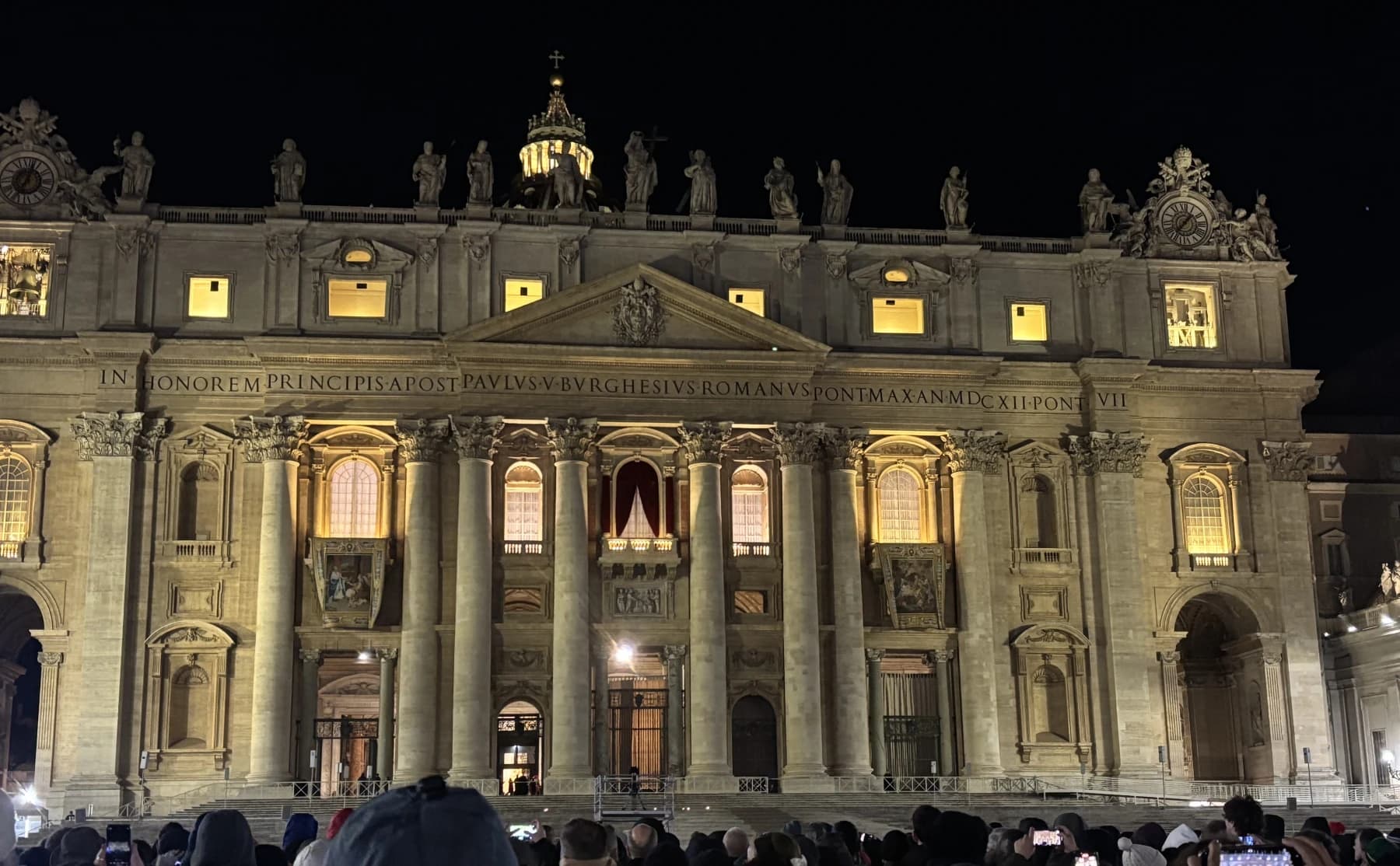
St. Peter's Basilica is free to enter and managed separately from the Vatican Museums. It does not require advance tickets, but it does require passing through airport-style security screening and adhering to the dress code.
Queue times vary dramatically by time of day. Early morning (8:00–9:00am, when the Basilica opens) typically means 15–30 minutes of waiting. Midday queues regularly exceed 60–90 minutes. Late afternoon (after 4:00pm) is often the most efficient time to visit the Basilica specifically, once the main tour groups have moved on.
If your itinerary includes both the Museums and the Basilica, a practical sequence is: Museums at 8:00am → Sistine Chapel → exit through the Museums → walk to St. Peter's Square → Basilica in the early afternoon once the Museums crowds have dispersed.
Climbing the Dome
The dome of St. Peter's offers one of the best elevated views of Rome — better than many tourists realize. Access is via a separate entrance on the left side of the Basilica facade. You can take an elevator partway and walk the remainder, or climb entirely on foot. The full climb involves 551 steps and a narrow final ascent that can feel claustrophobic.
Morning is the best time to climb — the light falls across the city from the east and the air is cooler. Allow 45–60 minutes for the full experience including the queue.
Dress Code — What's Enforced
The Vatican enforces its dress code consistently, and visitors who arrive underprepared are turned away at the entrance — no exceptions. The rules apply to both the Museums and the Basilica:
- No sleeveless tops or shoulders exposed
- No shorts, skirts, or dresses above the knee
- No low-cut necklines
- Hats must be removed inside the Basilica
Vendors outside sell cheap scarves and cover-ups at a significant markup. Pack a light layer or scarf in your bag regardless of the weather — it takes no space and removes the risk entirely.
- Bring water, but expect security checks to slow entry slightly.
- Wear shoes you would happily stand and walk in for several hours.
- Keep a lightweight layer ready even in summer for dress-code flexibility.
- Download tickets before arrival so you are not searching your inbox in line.
Free download
Rome trip checklist
Packing list, arrival logistics, booking timing, and Vatican-day reminders. Download before you book your entry slot.
Get the free checklistA Realistic Expectation
The Vatican will not feel empty. Even on a quiet Tuesday morning in November, the Sistine Chapel will have other visitors. The goal of good timing isn't solitude — it's manageability. An 8:00am entry on a weekday in shoulder season means you reach the Sistine Chapel before the tour groups who entered at 9:00am, and the difference in experience is significant.
No single visit covers everything, and trying to do so produces exhaustion rather than appreciation. Use the priority sequence above and give yourself permission to move through the rest at pace.
Frequently Asked Questions
What is the best time slot for the Vatican Museums?
The first morning slots are still the strongest default, especially 8:00 or 8:30. If those are gone, the late afternoon entry windows can feel much more manageable than midday, especially in high season.
Is 5:30pm a good Vatican booking time?
Yes, when that slot is available. It is one of the best fallback options because the biggest tour-group wave has usually cleared and the museum flow often feels noticeably lighter than midday.
Which months are best for visiting the Vatican?
January, February, November, and the quieter stretches of March are usually the easiest months for crowd management. April, May, June, September, and October are popular and require more discipline with timing.
What should I wear to the Vatican?
Shoulders and knees should be covered for both the Museums and St. Peter's Basilica. A lightweight layer or scarf solves most problems and is especially useful in hot weather.
How early should I book Vatican tickets?
For spring and autumn, several weeks ahead is sensible. For summer or holiday periods, book as soon as your dates are fixed if the Vatican is a priority.
Can I do the Vatican and the Colosseum on the same day?
You can, but it is usually a bad structure for most travelers. Both are demanding, both involve crowd management, and putting them on separate days nearly always produces a better trip.
Is a guided Vatican visit worth it?
It depends on how much context you want. Independent visits work well with a good time slot, but a guide can add real value in the Raphael Rooms and Sistine Chapel if art context matters to you.
This page contains affiliate links. If you book tickets or services through these links, we may earn a small commission at no extra cost to you. We only link to providers we would recommend regardless.
Related reading
- Is 2 Days in Rome Enough?
- Where to Stay in Rome for First-Time Visitors
- First Time in Rome: Complete Planning Guide
- Rome Airport Transfer: FCO & Ciampino to City Center
Related Services
Ways we can help with this trip
Personalized itineraries
Day-by-day Rome plans built around timing, geography, and the way you actually travel.
Explore itineraries →Experiences
Bookable Rome services (transfers, restaurant reservations, planning calls, car with driver) plus curated evenings, cooking classes, and day trips.
See experiences →Airport transfer
Fixed-rate pickup from FCO or Ciampino with meet and greet inside arrivals.
Book airport transfer →Stay in Testaccio
A two-bedroom apartment in Testaccio for travelers who want a local base without losing city access.
View the Testaccio stay →